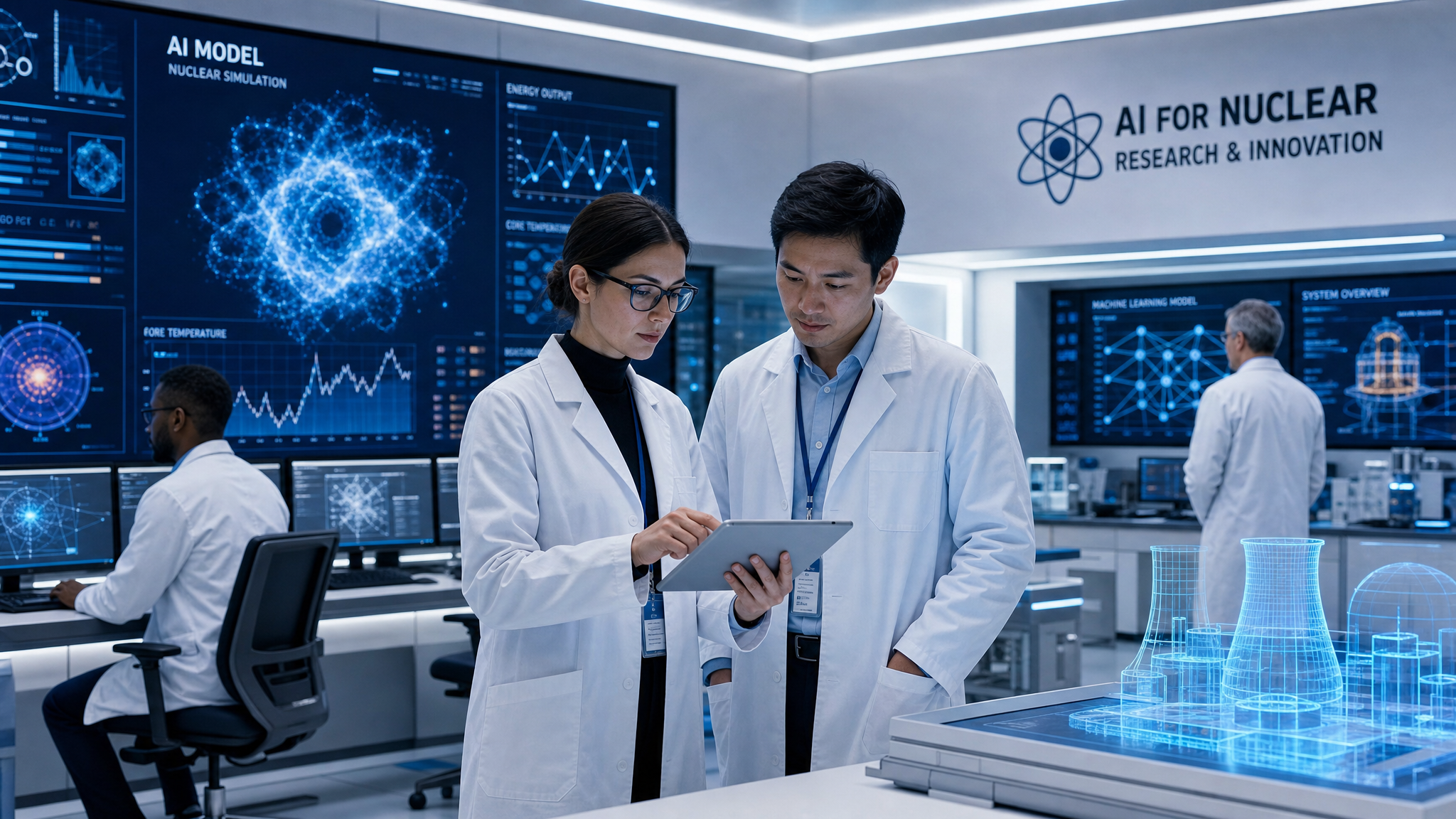
There's a story unfolding near Augusta, Georgia that most business owners haven't heard yet — but they should. One of the Southeast's largest federal installations is in the middle of a generational transformation, and the ripple effects are going to reshape the regional economy for decades to come.
The Savannah River Site started as a Cold War weapons facility. Today, it's becoming something else entirely.
Built for One World, Evolving for Another
When construction began on the Savannah River Site in the early 1950s, the mission was stark: produce nuclear materials for America's growing weapons arsenal. For decades, that's exactly what SRS did — operating reactors, producing plutonium and tritium, and playing a central role in U.S. national defense.
The Cold War ended. The weapons mission wound down. But the site — all 310 square miles of it on the Georgia-South Carolina border — didn't shut down. It pivoted.
Today, SRS is one of the nation's leading nuclear cleanup and environmental management sites, actively decommissioning Cold War-era facilities and remediating land that will eventually be returned to productive use. That cleanup mission brings billions in annual federal funding to the region — one of the largest ongoing federal investments in the Southeast.
But cleanup is only part of the story.
Savannah River National Laboratory: Where the Future Is Being Built
Embedded within the SRS footprint is Savannah River National Laboratory (SRNL) — a world-class research institution that is rapidly expanding into fields far beyond nuclear science.
SRNL is now actively developing capabilities in artificial intelligence and machine learning, applying these tools to environmental monitoring, nuclear materials management, and national security. The lab is investing in advanced manufacturing, cybersecurity, and next-generation energy research. It's a rare combination: the credibility of a decades-old federal research institution paired with the forward lean of a technology startup.
In May 2026, community leaders gathered at the Energy Communities Alliance Forum in Augusta to discuss the region's growing role in the nation's nuclear future — a conversation that included new reactor technologies, advanced fuel cycles, and the research infrastructure needed to support them. SRNL is at the center of that conversation.
The Savannah River Ecology Lab, operated by the University of Georgia, has also deepened its presence at SRS — with its director recently named a UGA University Professor, strengthening the research pipeline between Georgia's flagship university and one of the nation's most significant federal science campuses.
What Kind of Businesses Does This Attract?
Transforming a federal facility from weapons production to AI and environmental innovation doesn't happen in a vacuum. It requires people, services, and infrastructure — and that creates business opportunity.
The types of companies and professionals drawn to an evolving SRS ecosystem include:
- Technology firms building AI, data analytics, and environmental monitoring tools
- Engineering and consulting firms supporting decommissioning, site management, and research operations
- University spinoffs commercializing research from SRNL and UGA's Savannah River Ecology Lab
- Construction and remediation contractors working the active decommissioning projects
- Defense and national security contractors drawn by SRNL's cybersecurity and materials research
Each of these sectors brings high-earning professionals and growing companies to the Augusta metro area — and those workers need housing, healthcare, restaurants, legal services, and everything else a growing economy demands.
The DOE Grant Signal
In May 2026, the Department of Energy awarded a $5 million workforce development grant to the SRS Community Reuse Organization. That's not a maintenance signal — it's a growth signal. The federal government is investing in the human infrastructure needed to support the next chapter of SRS's mission. Where workforce investment leads, economic development follows.
What It Means for Georgia Business Owners
For Georgia entrepreneurs and business owners, SRS's transformation from a Cold War relic into an AI and innovation hub represents more than an interesting story. It represents:
- Expanding high-income population in the Augusta metro driving consumer spending and real estate demand
- New contract opportunities as the site's research and technology needs grow
- A rising tide that lifts business valuations across the region
If you're running a business in Georgia — especially in the CSRA, but increasingly across the state — you're operating in an economy being reshaped by forces like this.
Practical takeaway
- SRS is transitioning from Cold War cleanup to AI, research, and innovation — a generational economic shift for Georgia.
- SRNL's expansion is attracting high-skill talent and technology companies to the Augusta region and beyond.
- Economic transformation reshapes market values — knowing what drives your region matters for any business exit.
Get a free, no-obligation business valuation from First Choice Business Brokers Atlanta Metro.
Schedule Your Free Valuation at atlantametrofcbb.com/valuations