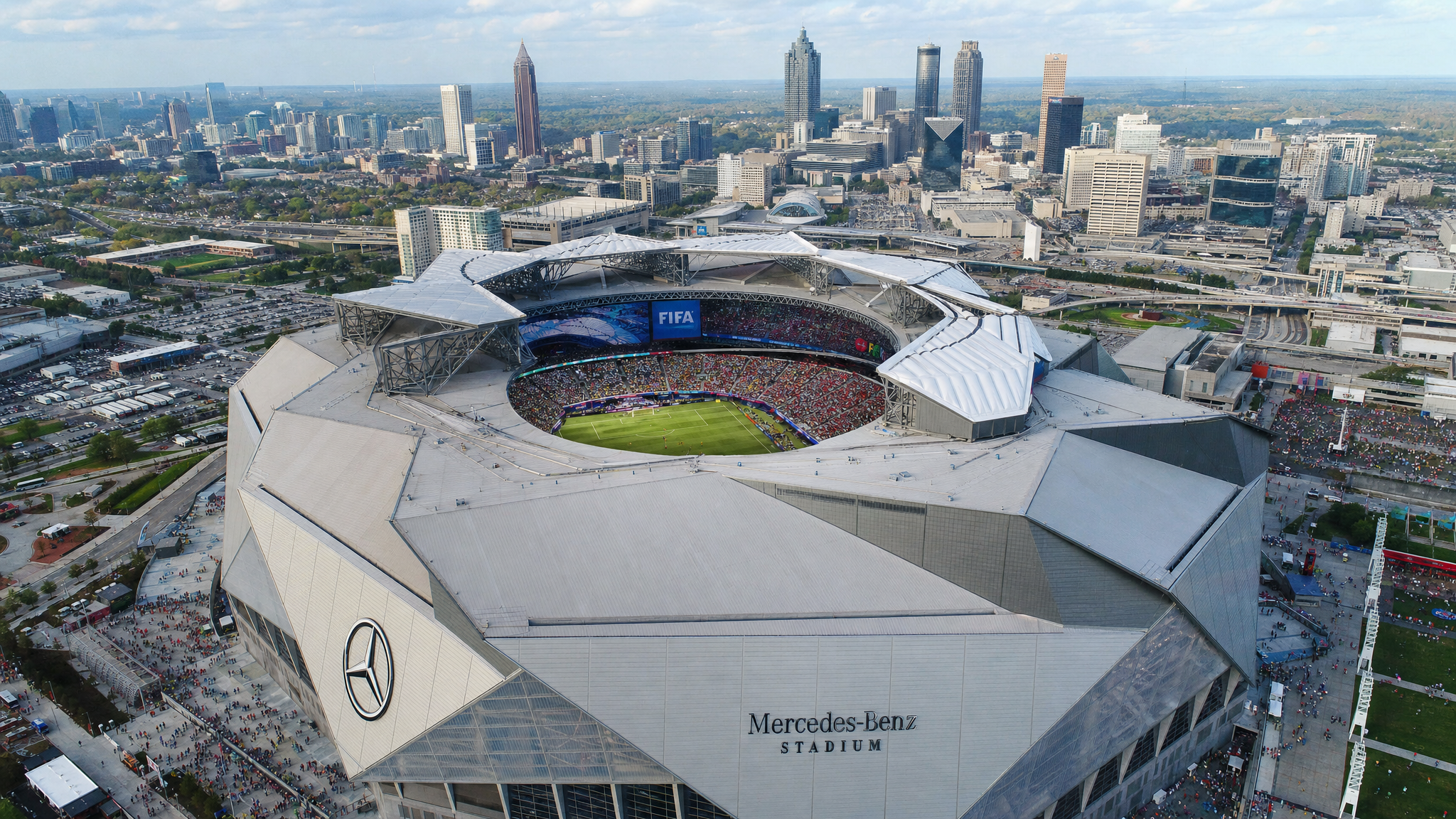
Between June 15 and July 15, 2026, Atlanta is one of 16 host cities across North America welcoming FIFA World Cup 2026 — the largest iteration of the tournament in history. Mercedes-Benz Stadium will host 8 matches total, including a semifinal. For Georgia business owners, those games are not just a civic moment. They represent a measurable, time-limited economic event that is already showing up in revenue, foot traffic, and hotel bookings across the state.
The Numbers Behind the Noise
The Metro Atlanta Chamber projects a $503.2 million economic impact to the state of Georgia from the World Cup. That is not a national figure or a broad estimate — it is a state-level projection tied specifically to Atlanta's hosting role. Analysts at Capital Analytics Associates put the broader metro-area impact closer to $1 billion when accounting for extended spending patterns and supply chain activity.
The hospitality sector alone is expected to generate an estimated $70 million during the tournament. Atlanta has already recorded more than 200,000 hotel room nights booked for the event — a volume that tells its own story about the scale of inbound visitor traffic the region is absorbing.
To put that in context: 200,000 hotel room nights represent roughly 200,000 visitors staying an average of one night each, or far fewer visitors staying longer. Either scenario means significant and concentrated consumer spending flowing through Metro Atlanta's hospitality, food and beverage, retail, and transportation businesses during a defined window.
Infrastructure and Small Business Support Already Deployed
The economic activity was anticipated early enough that preparation happened at a meaningful scale. The Invest Atlanta Board of Directors approved $925,000 in Tax Allocation District (TAD) funding to help small businesses upgrade their spaces ahead of the tournament. That capital was designed specifically to ensure local operators — not just stadium vendors and hotel chains — could capture a share of the incoming economic activity.
Atlanta also received more than $52 million from FEMA's FIFA World Cup Grant Program, covering public safety and infrastructure upgrades. That investment flows through local contractors, vendors, and service providers — a pre-tournament economic layer on top of the event itself.
Perhaps most directly relevant for small business owners: Showcase Atlanta created more than 200 vending opportunities across tournament festivals and activation zones. These were not incidental. They were structured opportunities designed to integrate local vendors into the official economic fabric of the event.
Who Is Capturing the Revenue
When 200,000+ out-of-state visitors land in Atlanta for a month of World Cup soccer, the spending does not stay inside Mercedes-Benz Stadium. It flows outward into every category of local business activity:
- Restaurants and food service — Visitors eat multiple meals per day. Atlanta's restaurant sector, already healthy, is running at heightened utilization throughout the tournament window.
- Retail and specialty shops — Souvenir-buying, incidental retail, and planned shopping trips all concentrate spending in neighborhoods near the stadium and in popular tourist corridors.
- Transportation and logistics — Rideshare, car rental, shuttle services, and parking operators are capturing premium-priced demand throughout June and July.
- Short-term rentals and hospitality — With hotel inventory largely sold out, vacation rental operators across Metro Atlanta are running at occupancy and rate levels that will stand out on any annual revenue chart.
- Event services and staffing — Security, event management, catering, AV, and production companies are booked deep into the tournament calendar.
What This Means If You Are Thinking About Selling
For Georgia business owners who have been considering a sale — or who are actively in conversations with buyers — the World Cup window creates a specific and important financial dynamic worth understanding.
Business valuations in the lower middle market are typically based on a weighted average of the last two to three years of earnings. A strong revenue spike in 2026 — driven by the World Cup, by hospitality demand, by increased consumer activity — will begin to show up in trailing twelve-month financials. For businesses in hospitality, food service, retail, events, and consumer services, 2026 is shaping up to be one of the strongest revenue years in recent memory for many operators.
That matters for valuation in two ways. First, a buyer or appraiser looking at your business later in 2026 or in early 2027 will see a trailing period that includes this elevated performance. Second, buyers will scrutinize whether that performance reflects a one-time event or a permanent step-up in the business's earning power. Owners who can document that the World Cup accelerated existing trends — rather than simply inflating a single quarter — will be in a stronger position to defend a higher valuation.
The practical implication: if your business is performing well right now because of World Cup-related traffic, document it carefully. Track revenue sources, note the connection to the tournament explicitly in your records, and work with your CPA to separate recurring revenue from event-driven revenue. That documentation will be valuable in any sale discussion.
A One-Month Window With Lasting Implications
The FIFA World Cup 2026 matches in Atlanta run through mid-July. The economic activity they generate — the hotel bookings, the visitor spending, the infrastructure dollars, the vendor opportunities — will be largely concluded by late summer. But the financial record of that activity will persist in your books for the next two to three years.
For Georgia business owners, the question is not whether the World Cup is an economic event. The numbers confirm it is. The question is whether your business is positioned to capture its share — and whether you are tracking that performance in a way that will hold up in a sale conversation.
Key numbers for Georgia business owners
- $503.2 million — Projected economic impact to Georgia (Metro Atlanta Chamber)
- 200,000+ — Hotel room nights already booked for the tournament
- $70 million — Projected hospitality sector revenue during the World Cup
- 200+ — Vending opportunities distributed to local vendors through Showcase Atlanta
- $925,000 — TAD funding approved by Invest Atlanta to help small businesses upgrade ahead of the event
- Atlanta hosts 8 matches, including a semifinal, June 15 – July 15, 2026
If your business is seeing elevated performance this summer and you want to understand what it means for your valuation or your timing, a conversation with First Choice Business Brokers Atlanta Metro is a good place to start.
Schedule Your Free Valuation at atlantametrofcbb.com/valuations